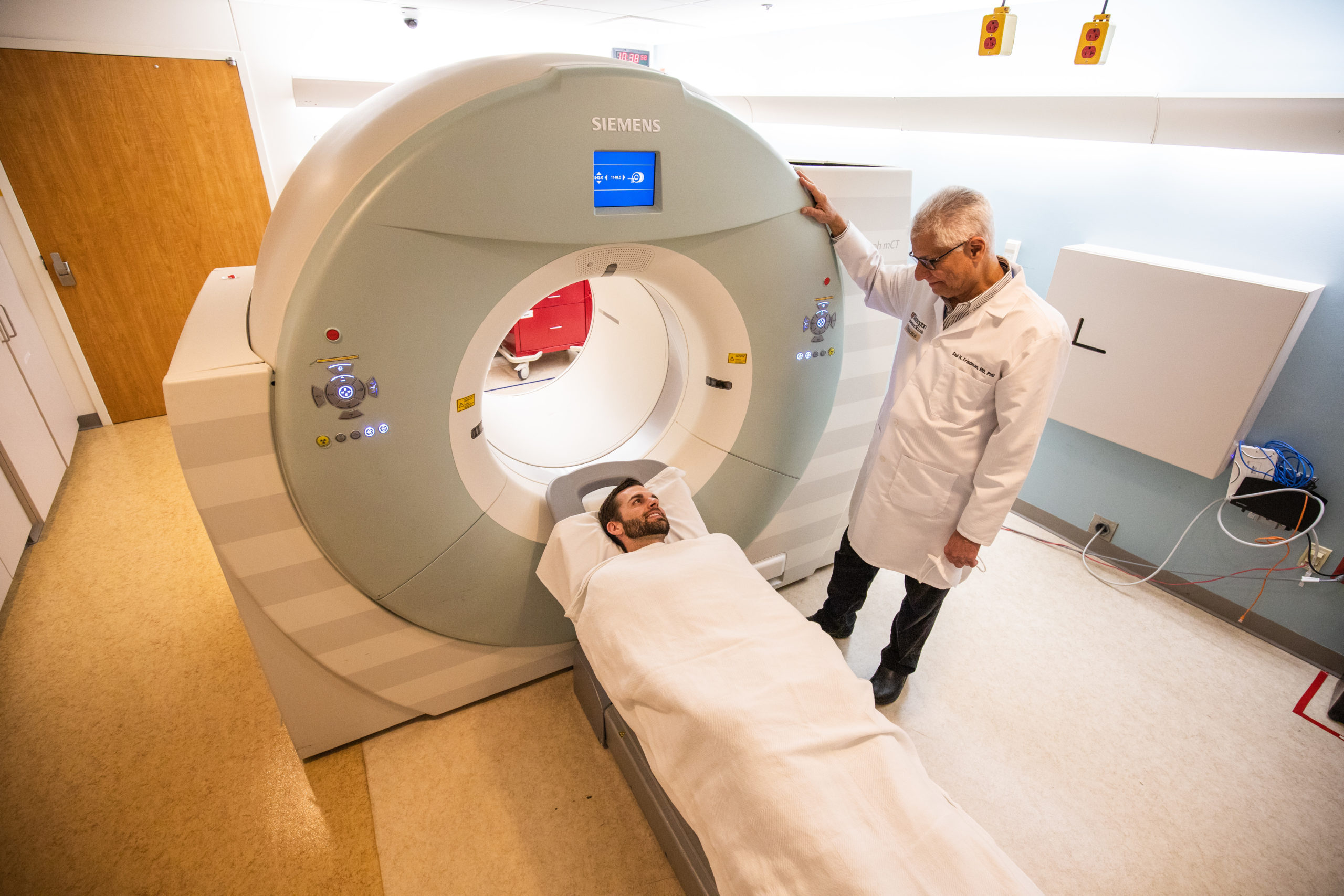
If you’re searching how to choose a LINAC or wondering which LINAC to buy, you’re already asking the right question — because a LINAC is not just a purchase. It’s a 10–12 year clinical + business commitment that will shape your uptime, patient outcomes, referral confidence, and profitability.
Most centres don’t fail because the linear accelerator for radiotherapy is “bad.” They struggle because selection was done without aligning:
the centre’s real case mix,
workflow maturity and staffing,
service ecosystem and uptime discipline,
and LINAC total cost of ownership (TCO) — not just the upfront quote.
This guide is built for decision-makers planning a radiation oncology centre setup or an upgrade, and it will help you choose the right LINAC for cancer centre requirements without hype. More importantly, it will show why many teams choose correctly only after they’ve lost time and money — and why onboarding a neutral partner early can prevent those mistakes.
Why LINAC selection is a high-risk decision (even for experienced teams)
Here’s the usual “hidden timeline” when LINAC selection is not structured:
A strong pitch and attractive deal wins
Installation begins → readiness gaps surface
Commissioning takes longer than expected
Advanced workflows get delayed due to training/QA gaps
Uptime issues and service delays create recurring revenue leakage
The centre underperforms, despite owning a “premium” system
The real cost is not the machine price. The real cost is: delays + rework + downtime + under-utilisation + reputational loss.
That’s why radiation therapy equipment selection must be treated like a project — not a shopping decision.
Step 1: Start with “Case Mix Truth” (the strongest filter)
Before you compare vendors, document what you will actually treat in Year 1 and Year 2.
Case mix truth sheet (simple but powerful)
Top disease sites you expect: breast, cervix, head & neck, prostate, lung, GI, brain
Expected % conventional vs advanced (IMRT/VMAT)
SBRT/SRS demand (realistic, not aspirational)
Motion-sensitive workload: lung/liver/upper abdomen
Palliative load (high-volume, fast turnaround)
Referral type: routine vs complex cases from day one
Decision rule: If your early volume will be conventional + IMRT/VMAT, don’t buy complexity you won’t execute. If SBRT/SRS and motion-heavy sites will be significant, don’t compromise on workflows that will make those treatments unreliable.
Step 2: Define your operating model (this decides what “right LINAC” means)
A LINAC should match how your centre will run daily — staffing, throughput, and clinical speed.
Operating model checklist
Throughput target (patients/day) and ramp-up plan
Shift structure (single shift vs extended hours)
Physics coverage, therapy team capacity, planning bandwidth
Simulation-to-treatment timeline expectations
Downtime tolerance and patient rescheduling process
Growth plan (second machine, additional techniques, expansion)
This step alone prevents overbuying features you won’t use — and underbuying capability you will quickly need.
Step 3: Evaluate LINAC capabilities using a vendor-neutral “must-have vs nice-to-have” lens
People commonly get trapped by feature lists. Instead, evaluate LINAC features IMRT VMAT SBRT through clinical intent and workflow reality.
Must-have (for most modern centres)
Robust IMRT/VMAT delivery capability
Practical imaging and verification workflow
Treatment reproducibility and safety discipline support
Stable uptime and service response structure
Only if your case mix demands it (and you can execute it)
SBRT/SRS workflow maturity, protocols, and QA bandwidth
Motion management and gating/breath-hold readiness
Higher complexity upgrades that increase operational load
Vendor-neutral truth: Advanced capability is valuable only if your team can deliver it safely, repeatedly, and on time. Otherwise it becomes under-utilised cost.
Step 4: The 6-pillar scorecard that prevents regret
Use this structured scorecard to compare options. It’s how neutral advisors keep decisions rational.
Pillar 1 — Case mix fit
Ask:
Does this platform match our Year 1 reality, not Year 5 dreams?
Are we buying capability we will use weekly, not “once in months”?
Pillar 2 — Imaging & workflow practicality
Ask:
What is the real treatment slot time for our typical cases?
How consistent is verification and matching on busy days?
Pillar 3 — SBRT readiness (only if required)
Ask:
Do we have protocols + trained staff for SBRT from month 1?
Is our QA capacity strong enough to sustain SBRT safely?
Pillar 4 — Service ecosystem and uptime protection
Ask:
Who is the on-ground service team for our region (names, not promises)?
What is response time at 7 pm, weekends, holidays?
Spares availability — locally stocked vs imported, and typical lead times?
Escalation ownership — who closes issues end-to-end?
This pillar decides your ROI more than brochure specs.
Pillar 5 — LINAC total cost of ownership (TCO)
TCO should be calculated across 5–10 years, including:
AMC/CMC structure and escalation
Software modules and upgrade roadmap
Consumables/accessories and QA tools
Training costs and workflow stabilization period
Downtime cost and revenue leakage risk
Pillar 6 — Execution readiness (commissioning + operations)
Ask:
Are civil/MEP systems stable (power/HVAC) before installation starts?
Is commissioning planning structured with gates and documentation?
Is the clinical workflow mapped end-to-end before go-live?
If this pillar is weak, even the “best LINAC” will underperform.
Step 5: Contracts matter more than most people realise (AMC/CMC can make or break you)
A major reason centres regret their purchase isn’t the machine — it’s the LINAC AMC CMC contract structure.
What to verify (and lock down)
What is included vs billable in warranty and service
Response time SLA and escalation clauses (written, not verbal)
Spares commitments and turnaround timelines
Preventive maintenance schedule and downtime planning
Price escalation terms and lock-in duration
Coverage details for critical failures
If your contract is weak, you are budgeting for surprise losses.
Best LINAC for small cancer centre: a practical approach
If your goal is best LINAC for small cancer centre, avoid extremes — don’t overbuy complexity and don’t underbuy capability.
What usually works best:
Strong IMRT/VMAT backbone with practical imaging workflow
Proven reliability + robust service network
A clear upgrade path (phased add-ons)
A realistic TCO and a strong AMC/CMC structure
Training + workflow stabilization built into the go-live plan
The best LINAC is the one that delivers consistent uptime and throughput with safe quality, not the one that wins on features alone.
Common mistakes when buying a LINAC (and how to avoid them)
These are the most frequent causes of delay and regret:
Buying the most “advanced” option without case mix justification
Ignoring service readiness and spares reality
Comparing only CAPEX and skipping LINAC total cost of ownership (TCO)
Assuming SBRT success without workflow protocols and QA capacity
Not planning power/HVAC stability early (commissioning disruptions)
Accepting vague “included” statements without contract clarity
Leaving decisions undocumented and unmanaged during installation
Avoiding these is not hard — but it requires a structured approach and neutral evaluation.
A simple decision tool: if you answer “YES” to 3+, get a neutral review before signing
Are we unclear about “Year 1 case mix” vs “future aspiration”?
Are the AMC/CMC inclusions and escalations not fully transparent?
Do we not have a 5–10 year TCO model?
Is service response/spares availability still vague?
Are we selecting under time pressure?
Are workflows and staffing not yet finalised?
Have we not mapped commissioning readiness with gates and owners?
If yes, you’re in the zone where projects commonly lose time and money.
Why decision-makers onboard Onco Solutions before finalising the LINAC
A LINAC decision becomes easy when someone converts uncertainty into a structured, documented path.
Onco Solutions helps leadership teams with:
Vendor-neutral shortlisting based on case mix and operating model
Practical evaluation of LINAC features IMRT VMAT SBRT (what you need now vs later)
TCO modelling and risk controls for downtime and future upgrades
Negotiation-ready specification and contract protection (AMC/CMC + SLA discipline)
Commissioning readiness plan tied to civil/MEP stability and go-live workflow
In short: we help you choose what fits, protect your investment, and launch faster with fewer surprises.
Explore our Services
For a structured LINAC selection and readiness onboarding, Request a consultation
Disclaimer: Content is for informational purposes and does not constitute medical advice. Always consult qualified healthcare professionals for clinical decisions.
Need Expert Guidance?
Discuss your oncology infrastructure project with our team.