When promoters plan a new cancer hospital, one question comes up early and repeatedly: what should we buy first — PET-CT, CT Simulator, MRI, or a LINAC? It sounds like an equipment question, but in reality it is a strategy question. The wrong sequence can lock a centre into idle capital, delayed approvals, underused departments, and an expensive go-live that takes longer than expected. The right sequence, on the other hand, creates a practical path from feasibility to first patient, while keeping future expansion open. That is why oncology equipment planning should never begin with brochures. It should begin with case mix, care model, workflow, referral geography, staffing readiness, and regulatory sequencing. The IAEA’s planning guidance for radiotherapy programmes emphasizes exactly this kind of structured approach: burden assessment, available resources, service scope, facility design, staffing, equipment selection, and quality assurance must be linked from the outset.
This is particularly important in cancer centre setup in India, where founders often try to solve everything in one capex round. That sounds ambitious, but it is usually not optimal. In India, the regulatory pathway for radiation facilities runs through AERB consents via eLORA, and radiotherapy projects also depend heavily on site readiness, shielding design, installation planning, and commissioning discipline. AERB’s own guidance makes it clear that radiotherapy facilities and associated equipment such as teletherapy, brachytherapy, simulator and CT-Simulator require regulatory approvals and structured compliance steps before procurement, installation, and operation.
So the real question is not “which machine is best?” The real question is: which technology sequence best matches the stage of your cancer programme?
The mistake most hospitals make
Many first-time oncology projects start by focusing on the most visible machine. Sometimes that is the LINAC because it signals advanced radiotherapy. Sometimes it is PET-CT because it signals high-end cancer imaging. Sometimes it is MRI because management wants the centre to feel “complete” from day one.
But equipment does not create a programme by itself. A cancer centre works only when diagnostics, multidisciplinary evaluation, treatment planning, treatment delivery, safety systems, staffing, and workflow all support one another. The IAEA’s guidance on setting up radiotherapy centres and master planning for radiotherapy facilities repeatedly stresses that equipment selection has to be integrated with legal, technical, staffing, radiation protection, design, and QA requirements, not treated as a stand-alone purchase.
This is why oncology equipment planning should be phased. A 30-bed cancer unit does not need the same technology entry point as a 100-bed comprehensive centre. Nor should a greenfield oncology project be sequenced the same way as an existing multispecialty hospital adding cancer services.
The right framework: plan by service model, not by machine desire
Before deciding whether PET-CT, CT Simulator, MRI, or LINAC comes first, define the service model.
You need answers to five practical questions:
Will the centre start as a medical oncology and diagnostics-led programme, or as a full radiation-enabled cancer centre? What is the expected case mix: solid tumours, head and neck, breast, thoracic, GI, gynae, haemato-oncology, palliative? Will advanced imaging be largely consumed internally, or will it depend on external referrals too? Is the project building toward comprehensive care under one roof from day one, or a staged scale-up? How quickly can the organisation recruit the clinical, physics, technologist, nuclear medicine, and operations talent required to use the equipment safely and profitably?
That is where cancer centre setup in India differs from generic hospital expansion. Oncology needs deeper service integration. The IAEA planning framework specifically ties infrastructure and equipment decisions to demand, geographical distribution, current utilization, available expertise, and sustainable resource planning.
What each technology actually does in the sequence PET-CT
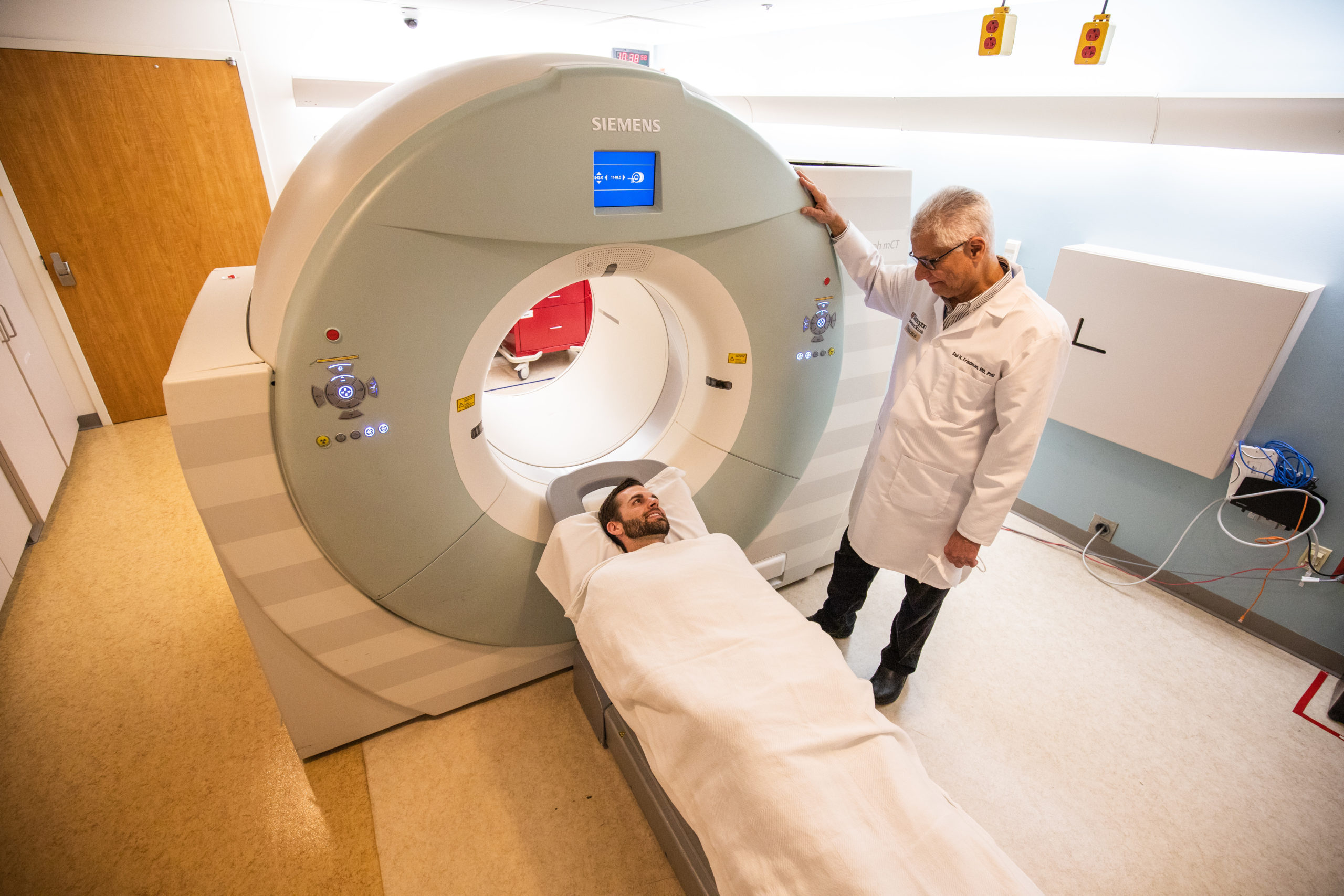
A PET-CT is a powerful diagnostic and staging asset. It can support oncology work-up, response assessment, recurrence evaluation, and in selected contexts can improve delineation for radiation treatment planning. The IAEA has highlighted the role of PET/CT in radiation treatment planning because it can help more accurately identify disease extent and potentially avoid unnecessary treatment of normal tissue. That said, PET-CT does not replace the need for a radiation treatment platform.
In business terms, PET-CT for cancer centre strategy works best when:
there is strong diagnostic oncology demand, the centre has or can build medical oncology and surgical oncology traffic, internal referrals plus external referral capture justify utilization, and the management wants to strengthen staging and tumour board capability early. CT Simulator
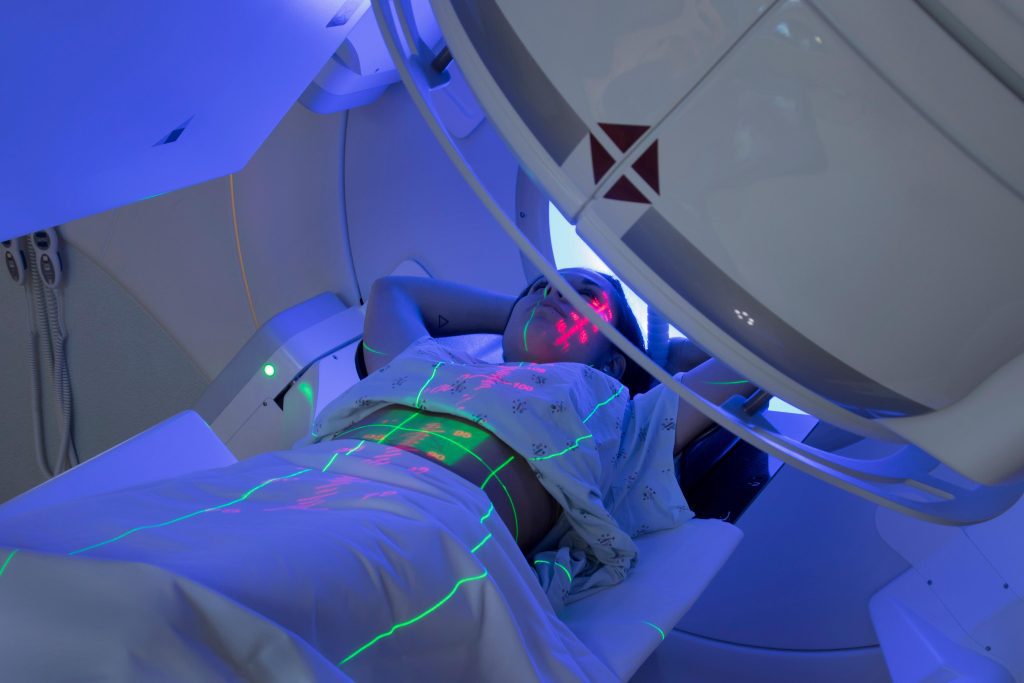
The CT Simulator is a core radiotherapy planning asset. It is not glamorous, but it is foundational. Without proper CT simulator planning, a radiotherapy programme cannot move smoothly from consultation to simulation to planning to treatment start. AERB guidance specifically includes simulator and CT-Simulator in the approval/procurement ecosystem for radiotherapy facilities, which underlines their operational importance.
MRI
MRI is valuable, but whether it should come early depends on the scope of the centre. MRI contributes meaningfully to cancer diagnosis, locoregional evaluation, and in some disease sites helps treatment planning when fused with CT-based workflows. But in a new project, MRI is often best viewed as a capability multiplier rather than the first anchor investment unless the broader hospital ecosystem will also consume it heavily.
LINAC
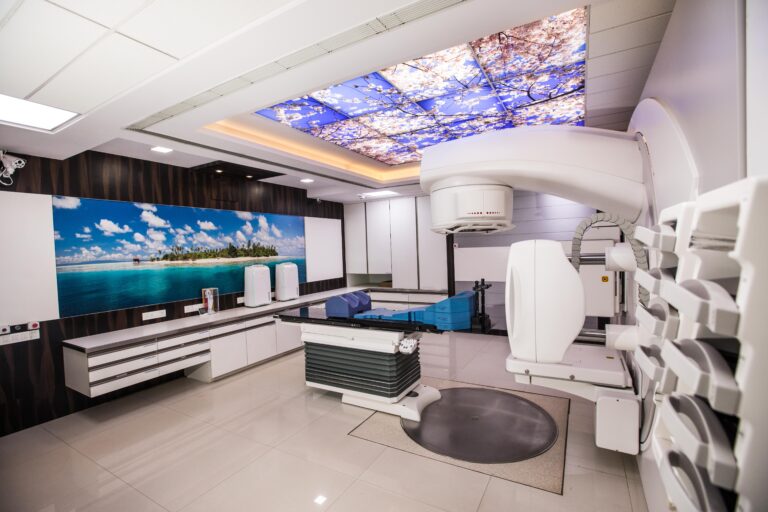
This is the treatment engine for external beam radiotherapy, but how to choose a LINAC and when to buy one should depend on workflow readiness, bunker readiness, manpower readiness, and patient capture confidence. A LINAC without completed radiotherapy bunker design, commissioning discipline, QA systems, and referral volume is a capital-intensive idle asset. AERB and IAEA guidance both make clear that safe radiotherapy delivery requires not just equipment, but programme design, site readiness, staffing, radiation protection, and QA.
Recommended sequence for a 30-bed oncology model
A 30-bed model is usually not a “buy everything at once” centre. It is often better to begin with the layers that build patient capture, tumour board quality, and treatment conversion.
Best sequence
Phase 1: Diagnostics + day care + clinical consultations Phase 2: PET-CT or MRI depending on referral environment Phase 3: CT Simulator + LINAC when radiation workflow is ready
For many 30-bed projects, the smartest sequence is not to start with the LINAC. Start with diagnostic depth, OPD conversion, chemotherapy/day care, pathology coordination, and multidisciplinary clinics. If there is strong imaging demand and referral density, PET-CT for cancer centre strategy can be the first major technology differentiator. If MRI demand is broader and the hospital can use it beyond oncology, MRI may be the better earlier asset.
But if you do not yet have the radiation team, the approved bunker, the planning workflow, and the lead times aligned, buying a LINAC first is often premature. Good oncology equipment planning protects you from that mistake.
Recommended sequence for a 50-bed cancer centre
A 50-bed model is where many promoters want to become “comprehensive.” This is also where sequencing makes the biggest commercial difference.
Best sequence
Phase 1: OPD + diagnostics + pathology + chemotherapy / supportive oncology Phase 2: CT Simulator + bunker + LINAC preparation in parallel Phase 3: LINAC go-live Phase 4: PET-CT or MRI depending on internal utilization model
For a 50-bed centre, radiotherapy often becomes commercially and clinically central. In that case, CT simulator planning should happen early, alongside finalizing the bunker, treatment planning workflow, QA tools, immobilization pathway, and manpower ramp-up. This is also the stage where AERB approval for radiotherapy centre becomes operationally critical because layout, procurement, and commissioning cannot be treated casually. AERB’s regulatory ecosystem for radiotherapy facilities, including use of eLORA, makes early compliance sequencing essential.
At this stage, the usual answer to how to choose a LINAC should not be “buy the most advanced model you can afford.” It should be:
what case mix will dominate in years 1 to 3, what throughput do you need, what complexity will your team realistically handle at go-live, and what upgrade path fits your long-term service ambition.
If internal oncology demand is already strong, PET-CT can follow quickly. If not, external imaging partnerships may be smarter before you lock capex.
Recommended sequence for a 100-bed comprehensive cancer centre
A 100-bed centre has the scale to justify a more integrated technology stack, but even here sequence matters.
Best sequence
Phase 1: Full diagnostic platform + tumour board model + radiation design finalization Phase 2: CT Simulator + LINAC + planning systems + QA systems Phase 3: PET-CT and MRI aligned to subspecialty depth and referral model Phase 4: service line expansion, brachytherapy, advanced imaging integration, future second bunker or second LINAC planning
At this scale, the question is less “which machine first?” and more “which layer unlocks the next layer fastest?” A 100-bed centre should still not buy technology in isolation. It should build a coherent programme. The IAEA’s master planning guidance specifically discusses risk assessment, legal and infrastructure requirements, professional expertise, block design, and future expansion in radiotherapy facility planning. That is exactly the logic a serious 100-bed project should use.
This is where radiotherapy bunker design becomes strategic, not merely technical. If you under-plan circulation, shielding, utilities, treatment planning areas, patient waiting, and future equipment pathways, your expansion becomes slow and expensive later. In real-world cancer centre setup in India, this is one of the most common hidden causes of delay.
So what should usually come first?
There is no universal answer, but there is a practical rule.
If you are building a diagnostics-led or referral-driven oncology model:
Start with PET-CT or MRI, depending on local demand and how much of the asset can be used across the hospital.
If you are building a radiation-led oncology centre:
Start with CT Simulator + bunker + LINAC planning, not just the LINAC purchase order.
If you are building a comprehensive centre:
Sequence diagnostics, treatment planning, radiotherapy readiness, and advanced imaging in parallel but not blindly in one procurement batch.
That is the essence of oncology equipment planning: sequence by conversion logic, not prestige logic.
Four decision filters every promoter should use
- Revenue timing versus go-live timing
A PET-CT may start generating diagnostic traffic sooner in the right market. A LINAC may create deeper oncology positioning but only after bunker readiness, approvals, installation, commissioning, and QA. This is why how to choose a LINAC cannot be separated from project schedule realism.
- Regulatory sequencing
If radiotherapy is in scope, AERB approval for radiotherapy centre is not a back-office activity. It is a project-critical workstream. eLORA-based approvals, site and layout considerations, procurement permissions, installation compliance, and operating consents all affect time to revenue.
- Workflow readiness
A centre can own a PET-CT or MRI and still underperform if referral coordination is weak. A centre can own a LINAC and still underperform if CT simulator planning, treatment planning workflow, QA routines, and patient navigation are weak.
- Expansion logic
Your first capital cycle should not trap your second one. Good radiotherapy bunker design and facility planning should allow future service additions, not block them. The IAEA explicitly recommends planning with future expansion in mind.
A practical sequencing recommendation from Onco Solutions
If a promoter asked us for a practical decision rule, we would frame it like this:
Choose PET-CT first when the project needs to strengthen diagnosis, staging, tumour board depth, and referral capture before heavy treatment capex. Choose CT Simulator and LINAC first when the centre has enough clinical depth and is intentionally building radiotherapy as a core differentiator. Choose MRI earlier when the broader hospital can also consume it strongly, or when the disease mix and diagnostic pathway make it indispensable. Do not choose a LINAC in isolation. Choose the full radiotherapy pathway: bunker, simulator, TPS, QA, immobilization, manpower, approvals, commissioning. Do not choose PET-CT in isolation either. Choose the referral ecosystem, nuclear medicine workflow, and reporting model that make it productive.
That is how cancer centre setup in India becomes commercially disciplined instead of equipment-led.
Final thought: sequence is strategy
The best cancer centres are not built by buying the most machines. They are built by buying the right capability in the right order.
If your project is 30 beds, think conversion and phased scale-up. If it is 50 beds, think integrated radiation readiness and staged imaging depth. If it is 100 beds, think master planning, future expansion, and service-line coherence.
In every case, the right answer comes from disciplined oncology equipment planning, careful CT simulator planning, realistic thinking about PET-CT for cancer centre demand, and an honest answer to how to choose a LINAC based on workflow rather than marketing. Add early attention to AERB approval for radiotherapy centre and thoughtful radiotherapy bunker design, and you dramatically improve your odds of a smoother go-live and a stronger long-term oncology programme.
At Onco Solutions, this is exactly how we approach greenfield and expansion projects: not as a machine purchase exercise, but as an end-to-end oncology infrastructure and commissioning decision. The right sequence saves time, protects capital, reduces redesign risk, and helps hospitals build a cancer programme that is clinically credible from day one.
Disclaimer: Content is for informational purposes and does not constitute medical advice. Always consult qualified healthcare professionals for clinical decisions.
Need Expert Guidance?
Discuss your oncology infrastructure project with our team.